
.png)
In honor of Healthcare Simulation Week, we are spotlighting the professionals who dedicate their lives to improving healthcare outcomes through training, skill development, and research. We sat down and asked questions about how they approach their career in simulation healthcare.
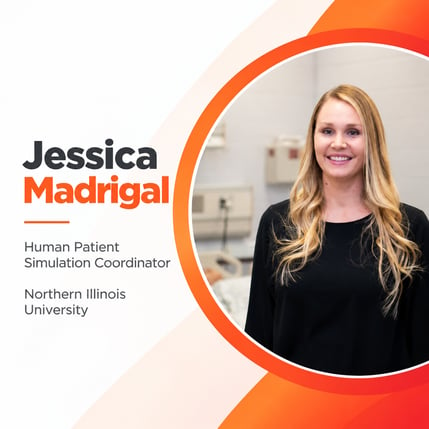
What inspired you to pursue a career in healthcare simulation?
"After deciding to leave bedside nursing I briefly taught students in the clinical setting. Part of their rotation was to come to simulation. I had done some very minimal simulation as a student in the past, but what I saw when I brought my students to sim for the first time was so enlightening! I wanted to be the one to facilitate students within simulation and help them learn how to think like a nurse and care for patients safely."
How do you stay updated with the latest advancements and best practices in simulation technology and techniques?
"Being certified in healthcare simulation education has allowed me to also gain support to continue my professional development. I am a member of INACSL and SSIH and these organizations do an amazing job to help us in the field stay up to date."
What are your goals to further advance the field of healthcare simulation?
"I have a deep sense of responsibility in helping our learners develop as nurses. One of our strategic initiatives at NIU is to graduate our nurses as practice ready and we have adopted Tanner’s Clinical Judgment Model as a framework to guide us as we have little time with students to coach and develop their clinical judgment. I have found challenges with the current tools available for formative assessment in simulation. After working with Dr. Christine Tanner and a team of experts, my goal soon is to start to use the new Tanner Clinical Judgment Rubric for formative feedback and development for our students in simulation."
What have been your “aha” moments that have reshaped the way you approach simulations?
"I am continuously improving my facilitation or coaching of students. An “aha” moment for me has come with my deeper work with Dr. Tanners new 2026 version of the clinical judgment model. Understanding that nurses and developing nurses don’t start with an assessment, they bring vast experiences, biases, clinical knowledge, ethics of care, their knowledge of the patient and expectations to every clinical situation and that is what guides what they will notice to be important and develop an accurate perceptual grasp of what is happening in the situation."
What advice would you give to individuals who are interested in pursuing a career in healthcare simulation?
"Healthcare simulation goes far beyond what happens in the lab. While there are many important and necessary components about what happens within a simulation lab, it is truly about the students learning and development as a nurse from these patient situations. My advice would be to really hone your debriefing skills. Be curious with the students to explore their thinking processes. Remember that they are learning and you are their coach. Learners don’t need our judgment or our knowledge, they need help in learning how to use their knowledge they have gained in the classroom, this is what will help create safe practice ready nurses."