
.png)
In honor of Healthcare Simulation Week, we are spotlighting the professionals who dedicate their lives to improving healthcare outcomes through training, skill development, and research. We sat down and asked questions about how they approach their career in simulation healthcare.
What inspired you to pursue a career in healthcare simulation?
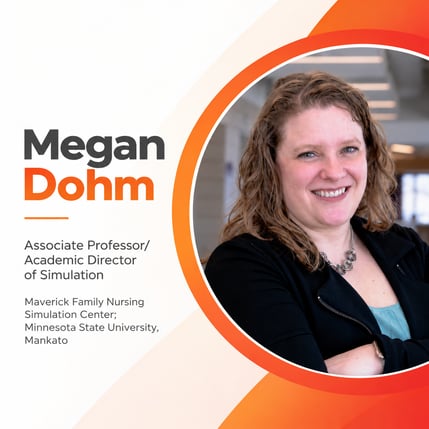
"My path into healthcare simulation was actually somewhat unexpected. While working on my Master’s degree in Nursing Education, I was looking for a project, and my faculty advisor knew I was an OB nurse. The program had just purchased its first birthing manikin, and it was still sitting in the box.
They needed someone to champion OB simulation, so I volunteered. That experience led to my first teaching position at a different institution, which was 75% simulation, and I’ve never looked back."
How do you stay updated with the latest advancements and best practices in simulation technology and techniques?
"I stay up to date by attending conferences like IMSH and INACSL, where I can learn about new simulation technologies and best practices.
I’m also involved with INACSL through a committee, which has connected me with some amazing people who share similar interests and are always willing to exchange ideas and experiences."
What are your goals to further advance the field of healthcare simulation?
"There are so many opportunities to advance healthcare simulation. My focus is on the academic side, helping learners develop clinical skills, clinical judgment, critical thinking, and practice readiness.
Right now, I’m especially interested in strengthening reflection skills and improving competency-based evaluation, particularly through effective rater training to ensure learner assessment is consistent and meaningful."
What have been your “aha” moments that have reshaped the way you approach simulations?
"I’ve been involved in simulation since 2009 and teaching since 2010. One of my biggest “aha” moments was when the simulation standards were first published. They validated many of the approaches I was already using and provided a strong framework for explaining the value of simulation-based learning to stakeholders.
Later, changes to our state Board of Nursing rules further supported the use of simulation, which opened the door for continued growth in what has become my favorite way to teach."
What advice would you give to individuals who are interested in pursuing a career in healthcare simulation?
"My biggest piece of advice is to get involved outside of your own institution, especially if you're a one-person simulation team or work in a small program.
The healthcare simulation community is incredibly welcoming and eager to share ideas and resources. Don't feel like you have to get everything right from the start. Simulation is an iterative process, and it's the small improvements you make over time that will ultimately build a strong and successful simulation program."